

Ethyl Acetate in Printing Inks and Flexible Packaging: A Buyer's Guide
Every printed snack pack, detergent pouch and label laminate made on a flexo or gravure press passes through solvent. In India's flexible packaging industry the most used of these solvents is ethyl acetate (CAS 141-78-6). This guide explains what it does in inks and adhesives, what to check before you buy, and how to store it safely.
What ethyl acetate does in packaging inks
- Dissolves the binder. Ethyl acetate is a strong solvent for the resins used in packaging inks, such as polyurethane, nitrocellulose and vinyl systems.
- Controls drying. It boils at about 77 °C and evaporates quickly, so printed film can be dried between stations at high press speeds.
- Adjusts viscosity. Press operators add it during the run to keep ink viscosity on target as solvent evaporates from the ink trays.
- Leaves little odour. Because it evaporates fast and completely, properly dried film has low residual solvent — important for food packaging.
Ethyl acetate in laminating adhesives
Solvent-based polyurethane laminating adhesives, used to bond printed film to foil, PET or PE, are commonly diluted with ethyl acetate. Here solvent quality matters even more: water and alcohol react with the isocyanate in the adhesive, which can cause poor bond strength, bubbles or slow curing. Converters therefore watch the moisture and alcohol content of their ethyl acetate closely.
Blends with other solvents
| Solvent | Role in the blend |
|---|---|
| Ethyl acetate | Main fast solvent for gravure and flexo inks and laminating adhesives |
| n-Propyl acetate | Slower ester; added to reduce drying-in on the plates or cylinders |
| Isopropyl alcohol (IPA) | Common in flexo and nitrocellulose systems; not used with PU adhesives |
| Butyl acetate | Slow ester for retarding drying in some ink systems |
The exact blend comes from your ink or adhesive supplier's technical data sheet; the converter's job is to use solvents that match the specification.
What to check before you buy
- Purity: 99.5% min. by gas chromatography.
- Moisture: low water content, especially for laminating adhesives.
- Acidity: reported as acetic acid; high acidity can affect sensitive ink and adhesive systems.
- Alcohol content: residual ethanol matters for polyurethane systems.
- Colour and residue on evaporation: should be water-clear with negligible residue.
Ask for the Certificate of Analysis for each lot and compare it with your ink or adhesive supplier's limits. We supply GNFC-make ethyl acetate, 99.5% min., in sealed 180 kg drums, with a COA for every lot.
Storage and safety
- Ethyl acetate is a Class 3 flammable liquid (UN1173) with a flash point of about −4 °C. Store drums in a cool, ventilated, flameproof area away from sparks and heat.
- Keep drums closed and earthed when decanting; solvent vapour is heavier than air and collects at floor level.
- Keep sealed drums sealed until use. An open drum picks up moisture from the air and loses solvent by evaporation.
- Follow your local fire and storage licence conditions for flammable liquids.
Supply in India and for export
We deliver ethyl acetate from Ankleshwar across Gujarat — the same day in Ankleshwar and Panoli, the same or next day to Surat, Vadodara and Dahej, and in 1–2 days to Vapi and Ahmedabad — and export it to packaging and ink markets including Nigeria, Kenya, Bangladesh and Italy. For shipping details, see our ethyl acetate export guide.
GNFC is a trademark of its owner. Aethon Chemicals is an independent supplier and stockist of genuine material and is not affiliated with this manufacturer.
Products in this guide
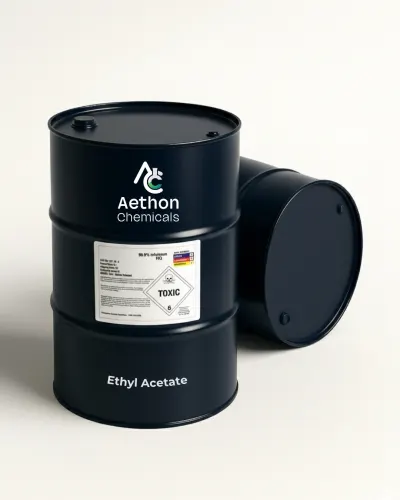
Ethyl Acetate
Ethyl AcetateChemical Name: Ethyl AcetateChemical Formula: C₄H₈O₂Form: Clear, colorless liquidCAS No.: 141-78-6HSN Code: 2915 31 00Grades Available: Industrial (Technical) Grade, P
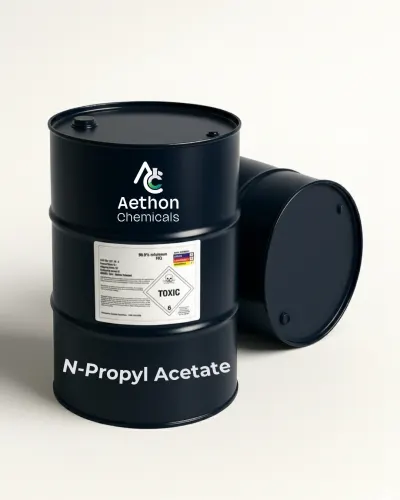
N-Propyl Acetate
N-Propyl AcetateChemical Name: N-Propyl AcetateChemical Formula: C₅H₁₀O₂Form: Clear, colorless liquidCAS No.: 109-60-4HSN Code: 2915 39 00Grades Available: Industrial (Technical) G
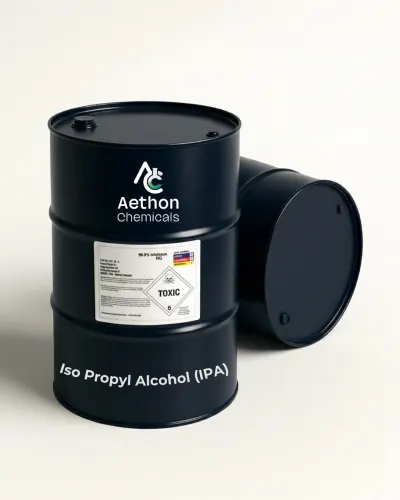
Iso Propyl Alcohol (IPA)
2-Propanol / Isopropyl Alcohol
Iso Propyl Alcohol (IPA)Chemical Name: 2-Propanol / Isopropyl AlcoholChemical Formula: C₃H₈OForm: Clear, colorless liquidCAS No.: 67-63-0HSN Code: 2905 11 00Grades Available: Indus
Frequently Asked Questions
Need a quote?
Tell us the product, quantity, packing and delivery location — we reply with pricing and availability within 24 hours.
More Market Insights
Sulphur for Fertilisers and Sugar Sulphitation: Which Grade to Use
In fertilisers, elemental sulphur is a slow-release sulphur nutrient: soil bacteria turn it into sulphate that crops can take up, and finer particles convert faster. In sugar mills, sulphur is burned…
Read the guide →Exporting Soda Ash to Bangladesh: Ports, Documents and Packing
Indian soda ash reaches Bangladesh by sea, mainly through Chattogram (Chittagong) and Mongla, for the country's textile, garment and soap industries. It ships as non-hazardous cargo under HS 2836.20 …
Read the guide →Caustic Soda in Textile Processing: Scouring, Mercerising and Dyeing
Textile processors use caustic soda (sodium hydroxide) mainly to scour cotton — removing natural waxes, pectins and oils so the fabric absorbs water and dye evenly — and to mercerise it in a strong N…
Read the guide →