

Caustic Soda in Textile Processing: Scouring, Mercerising and Dyeing
Walk into any cotton processing house in Surat, Sachin, Ahmedabad or Navsari and you will find caustic soda — sodium hydroxide, NaOH — near the start of the line. It prepares grey cotton for everything that follows. This guide explains where it is used, what grade to buy, and how to handle it safely on the shop floor.
Where caustic soda is used in a textile mill
| Process | What caustic soda does | Typical form used |
|---|---|---|
| Scouring | Saponifies natural waxes and oils and dissolves pectins, so cotton becomes absorbent | Dilute solution made from flakes or lye |
| Mercerising | Swells cotton fibres under tension for lustre, strength and better dye uptake | Strong NaOH bath, usually from lye or dissolved flakes |
| Bleaching | Keeps the peroxide bleach bath at the right alkaline pH | Small additions |
| Vat and sulphur dyeing | Provides the alkali the reducing system needs to dissolve the dye | Dissolved flakes |
| Machine and screen cleaning | Strips dye and size residues from vessels and screens | Hot caustic solution |
Scouring: making cotton absorbent
Raw cotton carries natural waxes, oils and pectins that repel water. If they stay on the fabric, dye takes unevenly and the finished shade looks patchy. In scouring, the fabric is treated in a hot alkaline bath: caustic soda turns the fats into soap (saponification) and breaks down the pectins so they wash out. Wetting agents and sequestering agents are added alongside it.
The amount of caustic soda depends on the fibre, fabric weight, machine (jigger, winch, soft-flow or continuous range) and how much impurity the grey fabric carries. Your process chemist sets the recipe; what matters on the purchasing side is that every lot of caustic soda is consistent, so the recipe does not have to be adjusted batch to batch.
Mercerising: lustre, strength and deeper shades
Mercerising treats cotton yarn or fabric in a strong caustic soda solution — typically around 20–25% NaOH — while it is held under tension, and then washes and neutralises it. The fibres swell and become rounder, which gives:
- Lustre: a silky shine, prized in shirting and premium cotton.
- Strength: higher tensile strength and better dimensional stability.
- Dye uptake: deeper shades with less dye.
Because mercerising uses a lot of caustic soda, large ranges often run on lye from a storage tank, while smaller units dissolve flakes. Our guide caustic soda flakes vs pearls vs lye compares the two.
Dyeing and pH control
In vat and sulphur dyeing, caustic soda supplies the alkali that keeps the reduced dye soluble so it can enter the fibre. In peroxide bleaching it holds the bath at the alkaline pH the bleach needs. For reactive dyes on cotton, most mills fix the dye with soda ash, sometimes boosted with a little caustic soda for deeper shades.
Which grade and form to buy
- Grade: industrial caustic soda flakes at 98–99% NaOH cover scouring, mercerising, dyeing and cleaning.
- What to watch on the COA: NaOH content, and low sodium carbonate and iron. Iron can cause yellowing in bleached goods.
- Form: flakes in 25 kg or 50 kg bags for most units; lye for large mercerising ranges with storage tanks.
- Make: mills often standardise on one make — GACL, Grasim, DCM Shriram or Epigral — to keep results consistent.
Dissolving and handling safely
- Always add flakes slowly to water, never water onto flakes. Dissolving releases a lot of heat.
- Use a dedicated dissolving tank with a stirrer, and wear goggles or a face shield, gloves and an apron.
- Keep an eyewash station near the dissolving point; caustic soda is UN1823, Class 8 (corrosive).
- Store bags sealed, dry and off the floor; open bags absorb moisture and lump.
- Neutralise caustic effluent before discharge as your ETP requires.
Supply to Gujarat's textile clusters
From our Ankleshwar warehouse we deliver caustic soda flakes the same or next day to Surat, Sachin and Vadodara, and in 1–2 days to Navsari and Ahmedabad. For makes, packing and what affects the price, see buying caustic soda flakes in Gujarat, or send your monthly requirement through our quote form.
GACL, Grasim, DCM Shriram and Epigral are trademarks of their respective owners. Aethon Chemicals is an independent supplier and stockist of genuine material and is not affiliated with these manufacturers.
Products in this guide
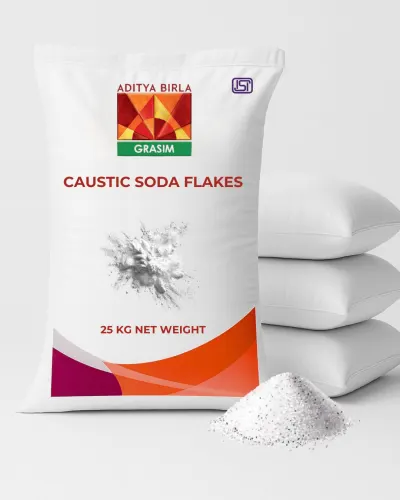
Caustic Soda Flakes
Sodium Hydroxide
Caustic Soda Flakes (Sodium Hydroxide)Chemical Name: Sodium Hydroxide Chemical Formula: (NaOH)Form: White, free-flowing flakesPurity & Grade: 98% – 99% (Industrial Grade)CAS No.: 1
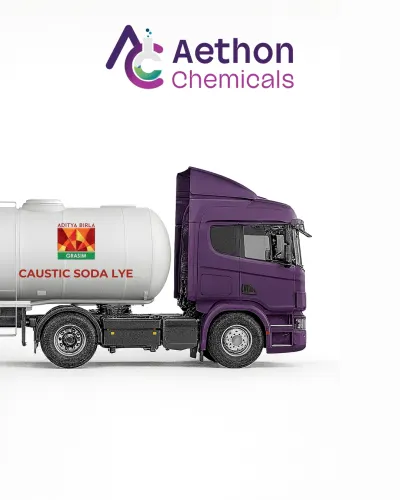
Caustic Soda Lye
Sodium Hydroxide
Caustic Soda Lye (Liquid Sodium Hydroxide)Chemical Name: Sodium HydroxideChemical Formula: (NaOH)Form: Clear to slightly hazy liquidPurity & Grade: 47% – 49% (Industrial Grade)CAS
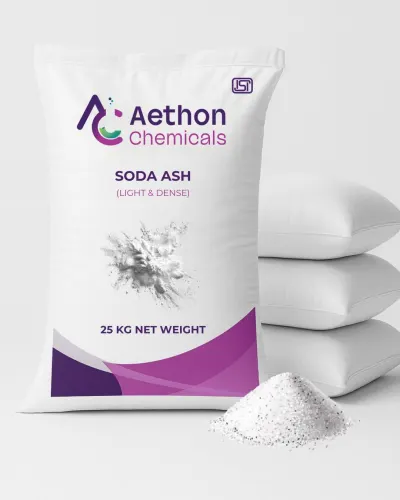
Soda Ash (Light & Dense)
Sodium Carbonate
Soda Ash (Light & Dense)Chemical Name: Sodium CarbonateChemical Formula: Na₂CO₃Form: Powder / Granules (Light & Dense)Grade: Industrial / Technical GradeCAS No.: 497-19-8HSN Code:
Frequently Asked Questions
Need a quote?
Tell us the product, quantity, packing and delivery location — we reply with pricing and availability within 24 hours.
More Market Insights
Sulphur for Fertilisers and Sugar Sulphitation: Which Grade to Use
In fertilisers, elemental sulphur is a slow-release sulphur nutrient: soil bacteria turn it into sulphate that crops can take up, and finer particles convert faster. In sugar mills, sulphur is burned…
Read the guide →Exporting Soda Ash to Bangladesh: Ports, Documents and Packing
Indian soda ash reaches Bangladesh by sea, mainly through Chattogram (Chittagong) and Mongla, for the country's textile, garment and soap industries. It ships as non-hazardous cargo under HS 2836.20 …
Read the guide →Ethyl Acetate in Printing Inks and Flexible Packaging: A Buyer's Guide
Ethyl acetate is the workhorse solvent of flexographic and gravure inks and solvent-based laminating adhesives for flexible packaging. It dissolves the ink resins, evaporates fast enough for high-spe…
Read the guide →